












Join 50,000+ people

Improve your lookswithout surgery

Get your personalized facial analysis and transformation plan based on your unique features.

As Seen In

usa-today
the-guardian
daily-mail
business-insider
the-sun
cosmopolitan
mit-technology-review
gq
wired
new-york-post

NEW APPROACH

Life-changing Transformations

Research consistently demonstrates the diverse, wide-ranging benefits of physical attractiveness.

  • Get more career opportunities
  • Boost your self-confidence
  • Make a stronger first impression
  • Improve your dating life
  • Enhance your quality of life
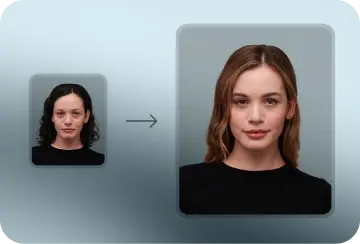
after
before

Before

Projection

after
before

Before

Projection

Studies show your looks influence almost everything, from your career to your romantic life.

Higher salary

Attractive people earn 10-15% more

Hamermesh, D. S., and J. E. Biddle. (1994). The American Economic Review.

Easier job interviews

Attractive job applicants are perceived as more qualified

Puleo, R. (2006). Journal of Undergraduate Psychological Research.

Bigger tips

Attractive servers receive $1261 more in tips annually

Parrett, M. (2015). Journal of Economic Psychology.

More sales

Customers are 55% more likely to buy from attractive sales people

Reingen, P. H., & Kernan, J. B. (1993). Journal of Consumer Psychology.

More swipes

On dating apps, looks matter about 9 times more than biographies

Witmer, J., Rosenbusch, H., & Meral, E. O. (2025). Computers in Human Behavior Reports.

More second-dates

In speed-dating studies, looks consistently predict success

Eastwick, P. W., & Finkel, E. J. (2008). Journal of Personality and Social Psychology; Luo, S., & Zhang, G. (2009).

More desirable partners

People usually end up with someone “in their league,” looks-wise

Luo, S. Social & Personality Psychology. 2017.

More important than we think

People understate how much looks affect their romantic choices

Eastwick et al. (2024). Journal of Personality and Social Psychology.

Funnier

Attractive people are found funnier on video than in audio

Cowan, M. L., & Little, A. C. (2013). Personality and Individual Differences.

Healthier

Attractive people are perceived to be healthier

Zebrowitz, L. A., & Franklin Jr, R. G. (2014). Experimental Aging Research.

Smarter

Attractive people are thought to be more intelligent

Moore, F. R., Filippou, D., & Perrett, D. I. (2011). Journal of Evolutionary Psychology.

Better

Attractive people are perceived as more moral and trustworthy

Shinners, E. (2009). UW-L Journal of Undergraduate Research; Klebl et al. (2022). Journal of Nonverbal Behavior.

Better treatment

Doctors miss 3.67 times more diagnoses for unattractive patients

Tsiga, E., Panagopoulou, E., & Benos, A. (2016). European Journal for Person Centered Healthcare.

Healthier lifestyle

Activities that make you more attractive are often good for you

Arnocky, S., & Davis, A. C. (2024). Frontiers in Psychology.

Longer lives

Attractive people live longer (perhaps, partially, due to the previous reasons)

Henderson, J.J.A., & Anglin, J.M. (2003). Evolution and Human Behavior.

Better teacher perceptions

Attractive students are perceived more positively by teachers

Ritts, V., Patterson, M. L., & Tubbs, M. E. (1992). Review of Educational Research; Talamas, S. N., Mavor, K. I., & Perrett, D. I. (2016). PLoS ONE.

Better student perceptions

Attractive professors receive stronger student evaluations

Theyson, K. C. (2015). Practical Assessment, Research, and Evaluation.

Higher grades

Attractive students get higher grades in-person than in online classes

Hernández-Julián, R., & Peters, C. (2017). Journal of Human Capital; Mehic, A. (2022). Economics Letters.

Fewer arrests

Attractive people are less likely to get arrested

Beaver, K. M., Boccio, C., Smith, S., & Ferguson, C. J. (2019). Psychiatry, Psychology and Law.

Fewer convictions

Attractive people are less likely to be convicted

Beaver, K. M., Boccio, C., Smith, S., & Ferguson, C. J. (2019). Psychiatry, Psychology and Law.

Lighter sentences

If convicted, attractive people are given lighter sentences

Mazzella, R., & Feingold, A. (1994). Journal of Applied Social Psychology.

Better networking

Attractive people build denser social networks

O’Connor, K. M., & Gladstone, E. (2018). Social Networks.

More leadership

Attractive politicians get more votes

Jaeger et al. (2021). Social Psychology.

More promotions

Attractive people are more likely to get promoted

Morrow, P. C., McElroy, J. C., Stamper, B. G., & Wilson, M. A. (1990). Journal of Management.

More followers

Attractive people get more favorable social media engagement

Gladstone, E. C., & O'Connor, K. (2013). Academy of Management Proceedings; Strey, S. (2019). MSc dissertation; Lund University.

Higher well-being

Attractive people report higher well-being

Datta Gupta, N., Etcoff, N. L., & Jaeger, M. M. (2016). Journal of Happiness Studies.

Lower mental illness

Mentally healthier people are more attractive, on average

Farina et al. (1977). Journal of Abnormal Psychology; Borráz-León et al. (2021). Adaptive Human Behavior and Physiology.

Personalized Analysis

Your complete facial analysis

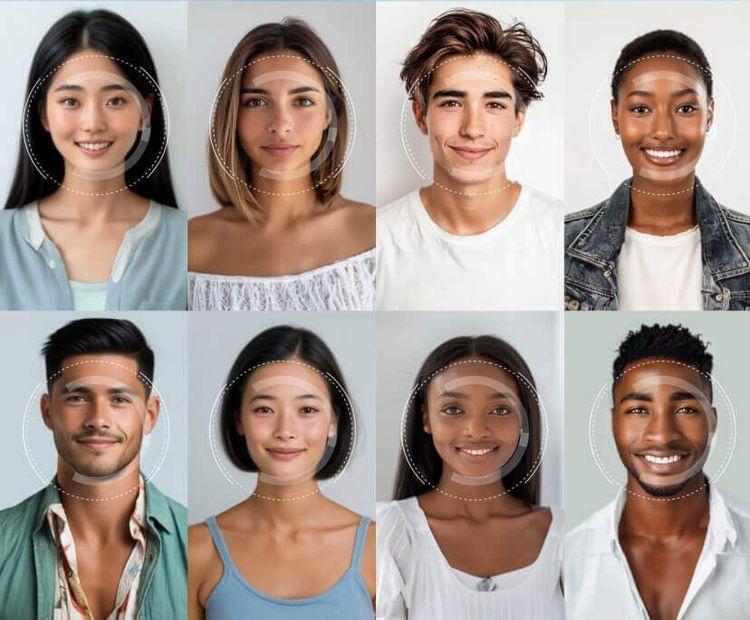
Every face is unique. We assess more than 160 unique beauty markers to give you a precise understanding of your aesthetics.

  • Feminine
    Masculine
    Bold
    Subtle
    Brows fall in the top 20% for natural fullness.
  • Your eyebrow density is in the mid 40th percentile
  • Lip Smoothness

    56%

    56% (You)

    • Rough (0%)

    • Smooth (100%)

    • Blue
    • Green
    • Brown
    • Deep
    Light Green

    Your eyes have a medium melanin concentration.

  • facial Thirds

    • Lower Third [c]

      0.31

    • Middle Third [b]

      0.38

    • Upper Third [a]

      0.31

    • Ideal
    • YOU
    • Average

    Asymmetrical

    Symmetrical

Your complete **facial analysis**

Personalized Analysis

Taking into account your...

  • Ethnic background

    Ethnic background

    Considers unique facial traits and characteristics common to your demographic.

  • Personal preferences

    Personal preferences

    Takes into account your individual style and preferences.

  • Lifestyle factors

    Lifestyle factors

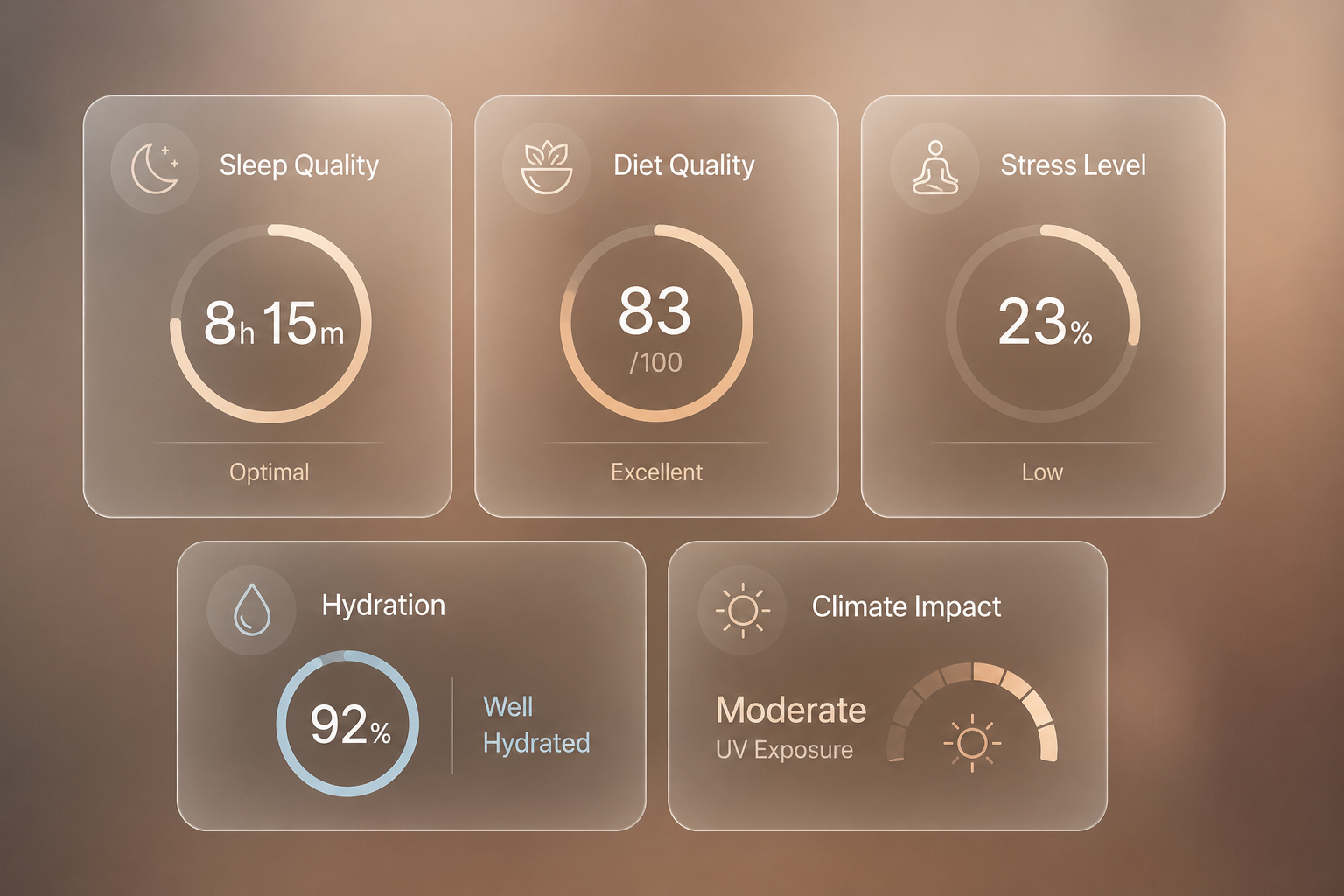
    Considers diet, climate, stress, sleep, and habits.

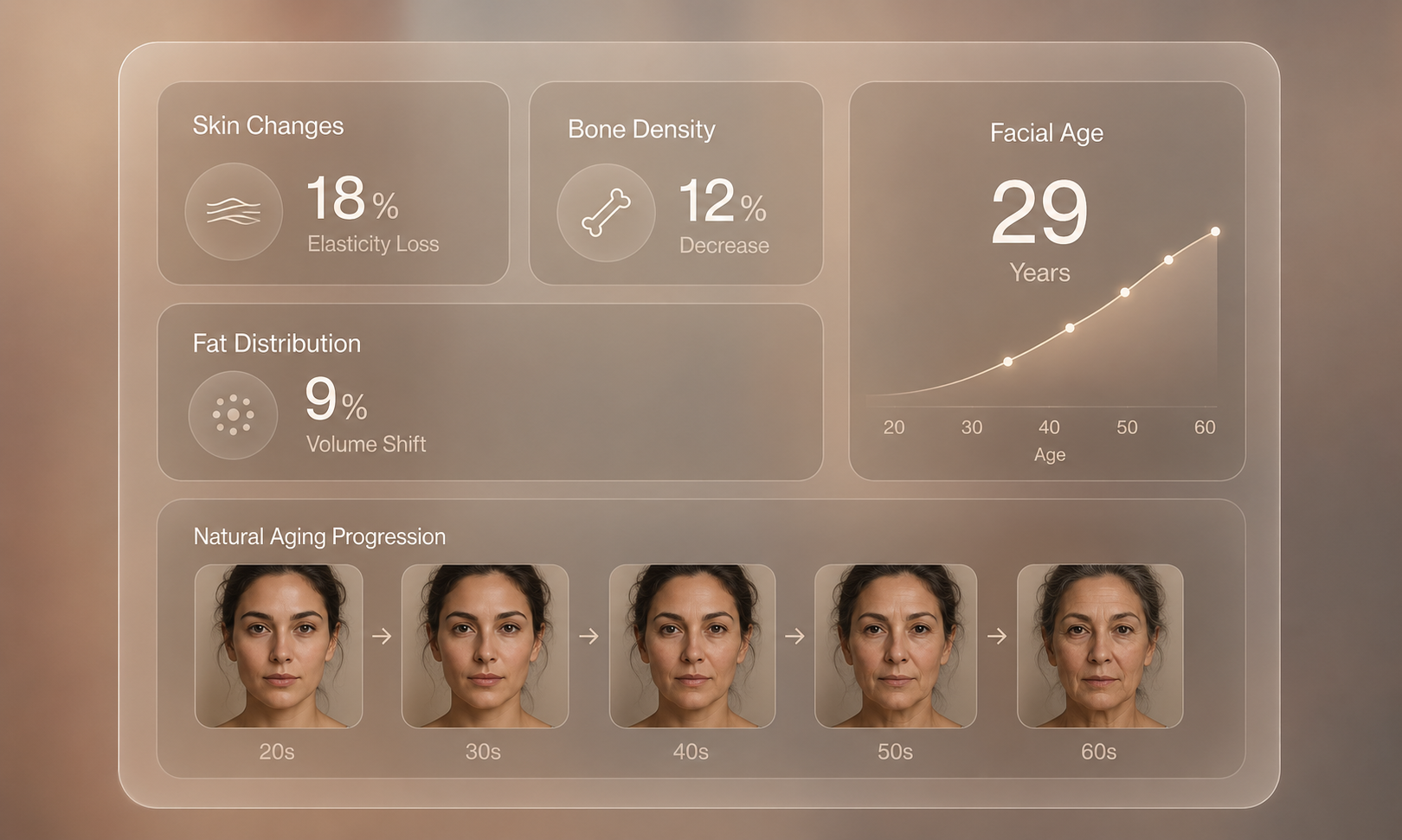
  • Natural aging patterns

    Natural aging patterns

    Considers how skin, bone, and fat distribution change over time.

  • Cultural beauty standards

    Cultural beauty standards

    Adapts to regional and societal ideals.

Personalized Plan

Get your personalized Qoves plan

Understand your facial features and take action today with a personalized plan designed for your unique facial structure.

  • [1]

    Get your expert facial analysis

  • [2]

    Visualize your best looking self

  • [3]

    Get your personalized glow-up protocol

  • [4]

    Track your progress and see visible changes

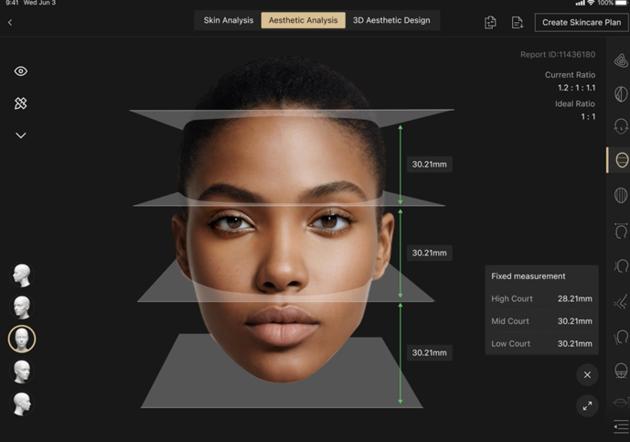
Qoves report viewer showing a personalized analysis report

Surgery-free transformations

No need for surgery

We combine advanced technology with expert knowledge to give you a personalized, science backed plan. Clear recommendations tailored to your features, goals, and preferences.

after
before

Before

Projection

after
before

Before

Projection

160+ Aesthetic Tests

The following tests are included in your Qoves analysis.

  • Tested 1x a year
  • From home
General Analysis

General Analysis

8 Tests Available

  • First Impression

    The immediate perception others form based on your facial appearance — often within milliseconds and before any interaction takes place.

  • Facial Masculinity

    How strong, angular, or traditionally "masculine" your facial features appear.

  • Facial Femininity

    How soft, delicate, or traditionally "feminine" your facial features appear.

  • Facial Averageness

    How closely your features match the typical or most common facial traits in your demographics.

  • Facial Proportions

    How well the different parts of your face are sized and spaced in relation to each other.

  • Facial Symmetry

    How closely the left and right sides of your face match.

  • Perceived Youthfulness

    The impression of a person's age based on their appearance, regardless of their actual chronological age.

  • Face Shape

    The overall outline of your face — such as oval, heart, square, or round.

Eyebrows

Eyebrows

14 Tests Available

  • Brow Shape

    The overall curve or angle of your eyebrows.

  • Brow Thickness

    How wide your brows appear from top to bottom.

  • Brow Position

    How high or low your brows sit on your face.

  • Brow Color

    The natural shade of your eyebrow hairs.

  • Brow Fullness

    How dense and filled-in your brows look.

  • Brow Symmetry

    How similar your left and right brows are in shape and size.

  • Brow Lift

    The vertical distance between your brows and eyes, which affects how lifted your eyes appear.

  • Brow Tilt

    The angle at which your brows slant — upward, downward, or straight.

  • Start Point

    Where your brow begins near the center of your face.

  • End Point

    Where your brow finishes, toward the outer side of your face.

  • Interbrow Distance

    The space between your eyebrows across the bridge of your nose.

  • Tail Length

    How far the outer end (tail) of your brow extends.

  • Tail Drop

    Whether the brow tail gently slopes down, stays straight, or tilts upward.
  • Hair Direction

    The natural direction in which your eyebrow hairs grow.
Eyes

Eyes

26 Tests Available

  • Eye Shape

    The overall outline and form of your eyes, such as almond, round, or hooded.

  • Eye Size

    How large or small your eyes appear overall.

  • Eye Width

    The horizontal distance from the inner to outer corner of the eye.

  • Eye Height

    The vertical opening of the eye, from the upper to lower eyelid.

  • Iris Color

    The natural color of the circular part of your eye.

  • Eyes Symmetry

    How similar your left and right eyes look in shape, size, and position.

  • Upper Eyelid Exposure

    How much of the upper eyelid is visible when your eyes are open.

  • Upper Eyelid Fullness

    The amount of volume or puffiness in the upper eyelid area.

  • Lower Eyelid Contour

    The shape, curvature, and definition of the area beneath the eye

  • Under-Eye Health

    The overall condition of the skin and structure under your eyes.

  • Under-Eye Pigmentation

    The level of darkness or discoloration under the eyes.

  • Under-Eye Puffiness

    Swelling or fullness beneath the eyes.

  • Under-Eye Hollowness

    Sunken or hollow areas under the eyes that may create shadows.

  • Under-Eye Vascularity

    Visibility of blood vessels under the eye skin.

  • Under-Eye Support

    How well the area under the eye is structurally supported and filled.

  • Eyelash Fullness

    How thick, dense, or long your eyelashes appear.

  • Eyelash Color

    The natural color of your eyelashes.

  • Eye Depth

    How far back or forward your eyes are set in your face.

  • Intercanthal Distance

    The distance between the inner corners of both eyes.

  • Interpupillary Distance

    The distance between the centers of your pupils.

  • Inner Eye Corner Shape

    The shape of the inner corners of your eyes (sharp, rounded, or covered).

  • Outer Eye Corner Shape

    The shape and tilt of the outer ends of your eyes.

  • Scleral Show

    How much of the white part of your eye (sclera) is visible below the iris.

  • Scleral Color

    The color and clarity of the white part of your eye.

  • Limbal Ring Visibility

    How visible the dark ring around your iris is (a sign of youth and eye clarity).

  • Epicanthic Fold

    A fold of skin covering the inner eye corner, common in many East Asian and other populations.

Nose

Nose

17 Tests Available

  • Nose Shape

    The overall appearance and outline of your nose from the front and side.

  • Nose Width

    How wide your nose appears across the base, typically from nostril to nostril.

  • Bridge Width

    The width of the upper part of your nose along the bridge.

  • Nose Symmetry

    How evenly the left and right sides of your nose match in shape and size.

  • Nostril Shape & Balance

    The shape of your nostrils and how balanced they are on each side.

  • Tip Definition

    How defined or rounded the tip of your nose looks.

  • Nostril Flare

    How wide your nostrils flare outward from the base of the nose.

  • Tip Projection

    How far the tip of your nose projects outward from your face in profile.

  • Nose Length

    The overall vertical length of your nose from top to tip.

  • Bridge Height

    How high or low the top of your nasal bridge sits on your face.

  • Nose Bridge Shape

    The overall shape of your nasal bridge — straight, curved, or with a hump.

  • Columella Alignment

    Whether the centerline of your nose (columella) is straight or tilted.

  • Septum Alignment

    Whether your nasal septum (the internal divider) is aligned or deviated.

  • Tip Rotation

    The direction your nose tip points — slightly up, straight, or downward.

  • Nasofrontal Angle

    The angle between your forehead and the top of your nose.

  • Nasolabial Angle

    The angle between the base of your nose and your upper lip.

  • Supratip Break

    A slight natural dip or curve just above the tip of the nose on the bridge.

Lips

Lips

16 Tests Available

  • Lip Shape

    The overall outline and contour of your lips, including how curved or straight they appear.

  • Lip Fullness

    How plump or thin your lips look overall.

  • Upper / Lower Lip Ratio

    The size relationship between your upper and lower lips.

  • Cupid's Bow Definition

    The shape and sharpness of the dip at the center of your upper lip.

  • Lip Width

    How wide your lips are across your face.

  • Lip Height

    The vertical height of your lips from top to bottom.

  • Lip-to-Face Proportion

    How your lips fit proportionally within the rest of your facial features.

  • Lip Projection

    How far your lips stick out from your face in profile.

  • Oral Commissure Tilt

    Whether the corners of your mouth turn slightly up, down, or stay level.

  • Philtrum Shape

    The shape and depth of the vertical groove between your upper lip and nose.

  • Vermilion Definition

    How clearly the border of your lips is defined.

  • Smoothness

    The overall softness and evenness of your lips’ surface.

  • Lip Lines

    Fine lines or creases on or around the lips.

  • Gloss and Hydration Level

    How smooth, moisturized, or glossy your lips appear.

  • Natural Lip Color

    The natural base color of your lips without makeup.

  • Lip Color Contrast

    How much your lips stand out from your skin tone in terms of color contrast.

Cheeks

Cheeks

13 Tests Available

  • Cheekbone Projection

    How much your cheekbones stick out from the side of your face.

  • Cheekbone Shape

    The overall outline and structure of your cheekbones — sharp, round, or flat.

  • Cheek Definition

    How clearly your cheekbones are defined and separated from the rest of your face.

  • Cheekbone Position

    The vertical placement of your cheekbones on your face.

  • Cheek Curve

    The natural curve or contour of your cheeks from the eyes down to the midface.

  • Cheek Height

    How high or low your cheeks sit on your face.

  • Cheek Peak Position

    The highest point of your cheek — where the cheekbone is most prominent.

  • Mid-Cheek Fullness

    The amount of volume or fullness in the middle area of your cheeks.

  • Under-Cheek Hollowing

    A hollow or sunken area just beneath the cheekbone.

  • Cheekbone Width

    The overall width of your face across the cheekbones.

  • Cheek Volume Balance

    How evenly volume is distributed across different parts of your cheeks.

  • Cheek-to-Jaw Balance

    The size and shape relationship between your cheeks and jawline.

  • Cheek-to-Eye Distance

    The distance between your cheekbones and your eyes — affects how supported or lifted the eyes appear.

Jaw

Jaw

11 Tests Available

  • Jaw Shape [Frontal]

    The overall shape of your jaw when viewed from the front — square, tapered, or rounded.

  • Jaw Shape [Side]

    The outline of your jaw when viewed from the side — sharp, sloped, or flat.

  • Jawline Definition

    How clearly your jawline is defined and visible.

  • Jaw Width

    How wide your jaw appears from side to side.

  • Jawline Length

    The length of your jawline from the angle to the chin.

  • Jaw Height

    The vertical height of the jaw, especially near the ear area.

  • Jawline Contrast

    The level of contrast between your jawline and neck — more contrast creates a sharper look.

  • Jaw Symmetry

    How similar the left and right sides of your jaw are in shape and size.

  • Jaw-to-Face Proportion

    How well your jaw fits proportionally with the rest of your face.

  • Jaw-to-Cheek Ratio

    The size relationship between your jaw and your cheekbones.

  • Jaw Flare Symmetry

    Whether both sides of your jaw flare out equally or unevenly.

Chin

Chin

8 Tests Available

  • Chin Shape

    The overall shape of your chin — rounded, pointed, square, or tapered.

  • Chin Projection

    How far your chin sticks out from your face in profile.

  • Chin Width

    The width of your chin from side to side.

  • Chin Height

    The vertical height of your chin from the bottom of your lower lip to the bottom of your face.

  • Chin Contour

    The overall curve or sharpness of your chin’s outline.

  • Chin Fullness

    The amount of volume or fullness at the front of the chin.

  • Chin Dimple

    A visible dip or indentation in the center of the chin.

  • Chin Inclination

    The angle at which the chin projects typically observed from the side profile.

Smile

Smile

13 Tests Available

  • Smile Shape

    The overall curve and structure of your smile — wide, soft, curved, or straight.

  • Tooth Show (full smile)

    How many teeth are visible when you smile fully.

  • Tooth Color

    The natural shade and brightness of your teeth.

  • Tooth Alignment

    How straight or aligned your teeth are.

  • Smile Symmetry

    How evenly both sides of your smile match in shape and movement.

  • Mouth Corner Lift

    How much the corners of your mouth lift when you smile.

  • Tooth Show (rest)

    How many teeth are visible when your face is at rest.

  • Gum Visibility

    How much of your gums show when you smile.

  • Smile Width

    How wide your smile stretches across your face.

  • Lip Line Position

    How high your upper lip rises when you smile.

  • Buccal Corridors

    The dark spaces that appear at the corners of your mouth when you smile.

  • Duchenne Activation

    Whether your smile involves the eyes, signaling genuine emotion.

  • Dynamic Wrinkle Formation

    Wrinkles or lines that form around your face when you smile.

Neck

Neck

11 Tests Available

  • Neck Shape

    The overall contour and outline of your neck.

  • Neck Definition

    How clearly your neck is defined and separated from your jawline.

  • Submental Fat

    The amount of fat or fullness under your chin (often referred to as a double chin).

  • Neck Firmness

    How tight and smooth the skin on your neck appears.

  • Neck Taper

    How gradually your neck narrows from the jaw to the base.

  • Neck Length

    How long or short your neck looks from the chin to the collarbone.

  • Neck Width

    How wide your neck appears when viewed from the front.

  • Neck Posture

    The alignment and positioning of your neck in relation to your head and shoulders.

  • Skin Texture & Tone

    The quality of your neck skin — including smoothness, clarity, and even tone.

  • Muscle Definition

    Visibility of neck muscles, especially during movement or in leaner necks.

  • Adam’s Apple Visibility

    How noticeable the Adam’s apple is — more prominent in some individuals, especially men.

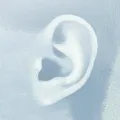
Ear

Ear

12 Tests Available

  • Ear Shape

    The overall outline and structure of your ears.

  • Ear Size

    How large or small your ears appear relative to your head.

  • Ear Projection

    How far your ears stick out from the sides of your head.

  • Ear Angle

    The angle at which your ears tilt away from your head.

  • Ear Placement

    Where your ears sit on your head in relation to your eyes and nose.

  • Ear Height

    The vertical length of your ears from top to bottom.

  • Ear Width

    The width of your ears from front to back.

  • Ear Symmetry

    How similar your left and right ears are in size, shape, and position.

  • Helix Shape

    The shape and curve of the outer rim of your ear.

  • Antihelix Shape

    The inner Y-shaped ridge of your ear that adds depth and structure.

  • Earlobe Shape

    The shape and size of your earlobes — attached, free, or in between.

  • Ear Bowl Shape

    The hollow central area of your ear that sits just above the earlobe.

Skin

Skin

20 Tests Available

  • Skin Tone

    The overall lightness or darkness of your skin.

  • Skin Undertone

    The underlying hue of your skin — warm, cool, or neutral.

  • Skin Smoothness

    How soft and refined your skin feels and looks.

  • Evenness

    How evenly colored and consistent your skin appears overall.

  • Acne

    Visible pimples, blackheads, or breakouts on the skin.

  • Acne Scarring

    Marks or indentations left behind from past acne.

  • Hyperpigmentation

    Areas of the skin that are darker than your natural tone.

  • Dark Spot Concentration

    Where darker spots are clustered or most noticeable on your face.

  • Blemishes

    Small imperfections like pimples, marks, or uneven areas.

  • Redness

    Pink or red tones caused by irritation, sensitivity, or inflammation.

  • Sun Damage

    Visible signs of sun exposure, like spots or rough texture.

  • Pore Visibility

    How visible your pores are across the skin’s surface.

  • Pore Size

    The size of your pores — larger pores can appear more noticeable.

  • Fine Lines

    Small, shallow lines that are early signs of aging or dryness.

  • Wrinkles

    Deeper folds or lines that come with aging or repeated expressions.

  • Skin Texture

    The overall pattern of your skin’s surface — smooth or uneven.

  • Roughness

    Areas that feel or look rough, dry, or flaky.

  • Scarring

    Scars unrelated to acne, often from injury or surgery.

  • Vascular Visibility

    Visible blood vessels or redness caused by broken capillaries.

  • Oiliness

    The level of natural oil your skin produces, which can affect shine and texture.

Learn about your face

Discover what makes you, you.

Understand your features and their impact on your appearance.

1

Your most noticeable feature

Discover the one trait everyone sees first and how it shapes your entire impression

2

How each features affects your look

See how individual features work together to influence balance, symmetry, and overall appearance.

3

Features with the most potential

Find out which of your features have the most potential for improvement.

Advisors

Advised by the World's Leading Authorities on Facial Beauty

Built with input from the leaders shaping modern aesthetics.

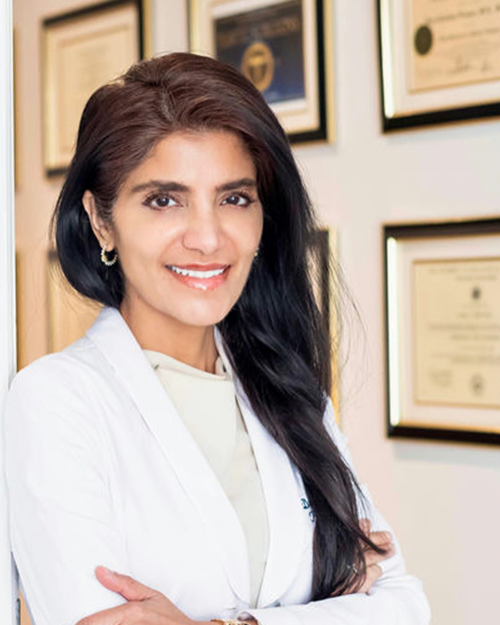
Dr. Lara Devgan

Dr. Lara Devgan

Top board-certified female plastic surgeon in New York, Founder of Dr. Devgan Scientific Beauty, Vogue & Elle Beauty Board, Former RealSelf CMO, Yale Sterling Fellow, NIH Scholar

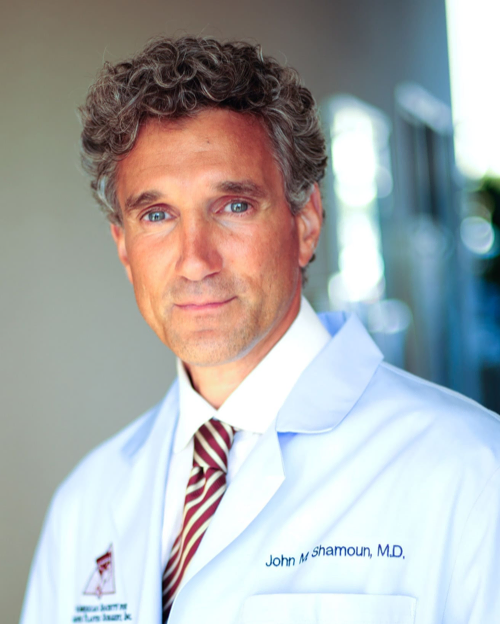
Dr. John Shamoun

Dr. John Shamoun

The only U.S. plastic surgeon with six active board certifications

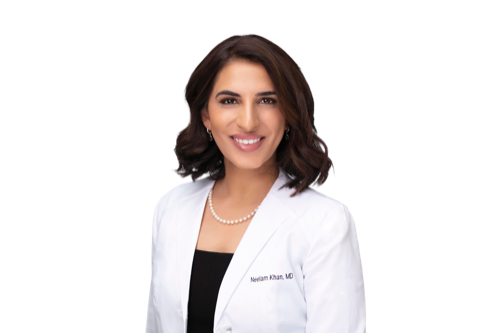
Dr. Neelam Khan

Dr. Neelam Khan

Founder of Neely Dermatology & Aesthetics, Clinical Assistant Professor at Georgetown University

Dr. Daniel Gould

Dr. Daniel Gould

Editorial Board member of the Aesthetic Surgery Journal, Sherrell Aston Award recipient

Mr. Ayad Harb

Mr. Ayad Harb

Founder of SRGN and Aesthetic Intelligence, educator to 4,000+ aesthetic professionals

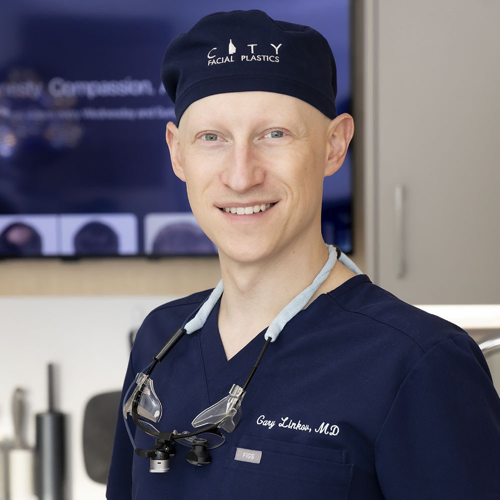
Dr. Gary Linkov, M.D.

Dr. Gary Linkov, M.D.

ISHRS Communications & Public Education Committee Member, Founder of Feel Confident, Former Adjunct Assistant Professor at NYU

Dr. Michael Keyes

Dr. Michael Keyes

Founder of Celebrity Plastics, Vice-Chair of the ASPS Social Media Subcommittee

Dr. Shim Ching

Dr. Shim Ching

Associate Clinical Professor at the University of Hawaii JABSOM School of Medicine

Dr. Jonathan Zelken

Dr. Jonathan Zelken

Johns Hopkins–trained plastic surgeon, CEO and Medical Director of Zelken MD

Dr. Oliver Zolman

Dr. Oliver Zolman

Founder of Longevity Level 1, 2, 3 Protocol, King's College London Medical Doctor

Technology

The technology behind your transformation

Our tech and expertise create a personalized, science-backed plan. No guesswork, just smart, personalized advice to help you become the best-looking version of yourself.

  • Precision facial analysis

    We use state-of-the-art landmarking technologies to map 521 facial points of your face, delivering a detailed facial analysis.

    Precision facial analysis.
  • Unmatched Personalization

    We consider your ethnicity, age, location, lifestyle, and budget. Every glow-up plan is unique.

    Unmatched personalization
  • The Science of Facial Attractiveness

    Diagnosia analyzes your face based on more than 160+ aesthetic tests.

    Proportion Dimorpshism Averageness Neoteny Contrast Symmetry
  • Reviewed by Humans

    Every analysis is carefully reviewed by our team to ensure quality, consistency, and clarity.

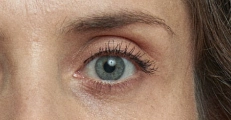
    Summary of your eyes

    Eye Tilt

    Downturned

    Eyelid Exposure

    Moderate

    Eye Shape

    Almond

    Undereye Health

    Suboptimal

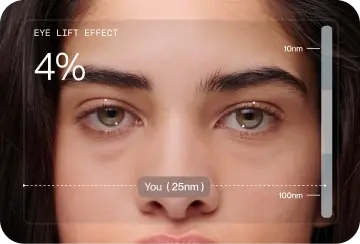
    Typical roundness

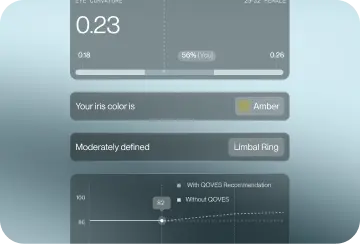
    Your eyes have a curvature value of 0.23 whereas the average for your demographic is 0.21. They are as rounded as expected.

    EYE CURVATURE 0.23 25-32 WHITE FEMALE 0.18 0.26

    Analysis of your eye shape

    We analyze your eye shape to understand how it impacts your aesthetics and overall attractiveness.

    Inner Corner [b]

    Medial Canthal Tilt

    Upper Eyelid [a]

    Rounded

    Inner Corner [b]

    Medial Canthal Tilt

    Outer Corner [C]

    Tapered Crease

    Eyelid Contour [D]

    Elongated Shape

    Outer Corner [C]

    Tapered Crease

    Typical roundness

    Your eyes have a curvature value of 0.23 whereas the average for your demographic is 0.21. They are as shapely and rounded as expected.

Background

Your face tells your story

Learn about how your features might reflect your ancestry.

  • 1

    High cheekbones are often linked to Northeast Asian ancestry, providing protection against cold.

  • 2

    Deeper-set eyes and strong brow ridges are typical in Northern Europeans, aiding in harsh winter light.

  • 3

    Broader noses are common in humid climates like tropical Africa, while narrower noses are found in cold, dry areas.

  • 4

    About 50% of East Asians have double eyelids, with higher prevalence in northern Korea and Japan.

  • 5

    Facial width-to-height ratios differ by region; East Asians generally have wider faces compared to Europeans.

Dr. Shim Ching

“I am excited to be partnering with Qoves, an innovative state of the art facial analysis system that I believe is the future of the aesthetic medicine”

Dr Shim Ching

Associate Clinical Professor at the University of Hawaii JABSOM School of Medicine.

Transformations

Some non-surgical transformations

All the transformations below were achieved without any surgical interventions.

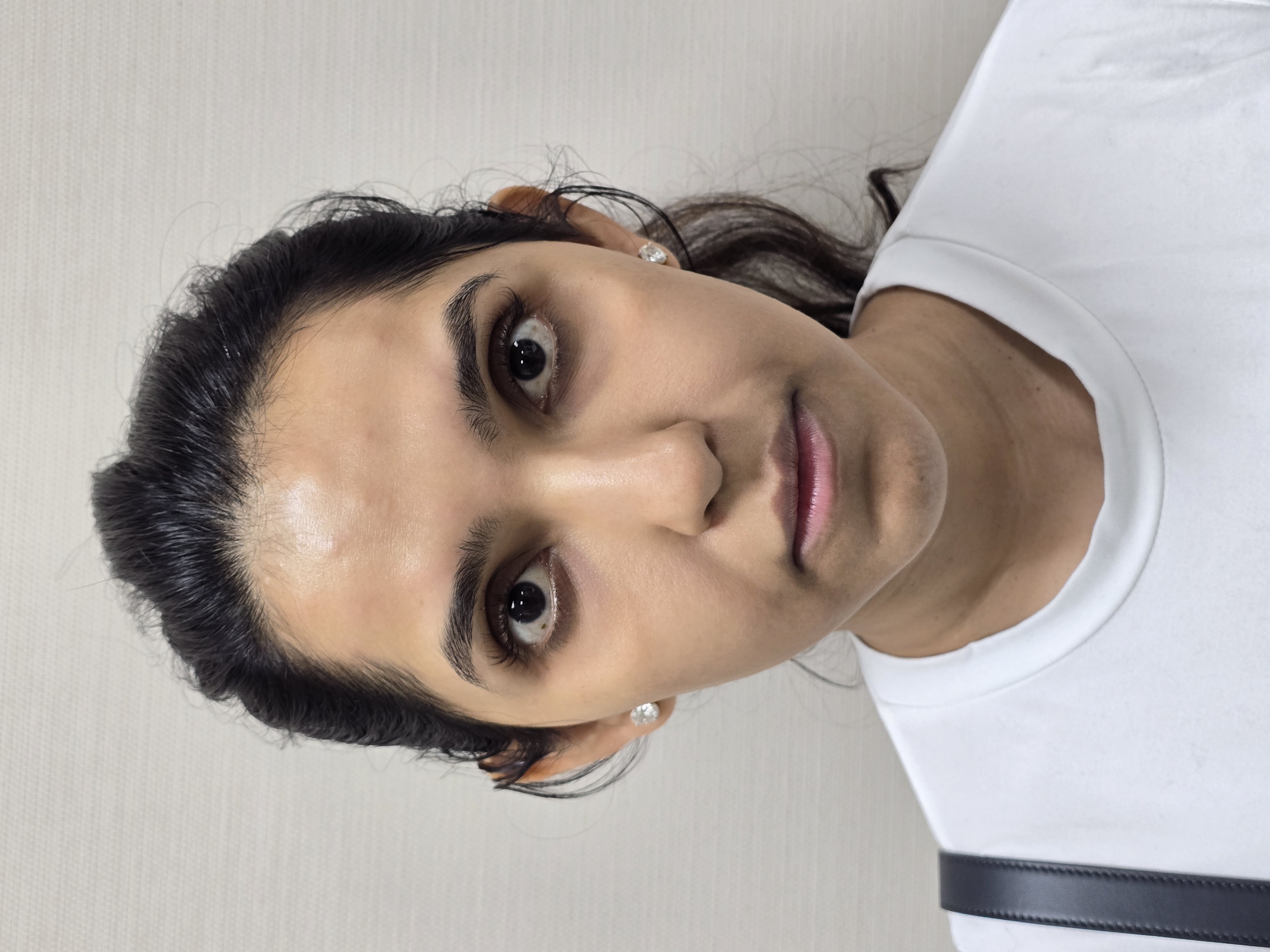
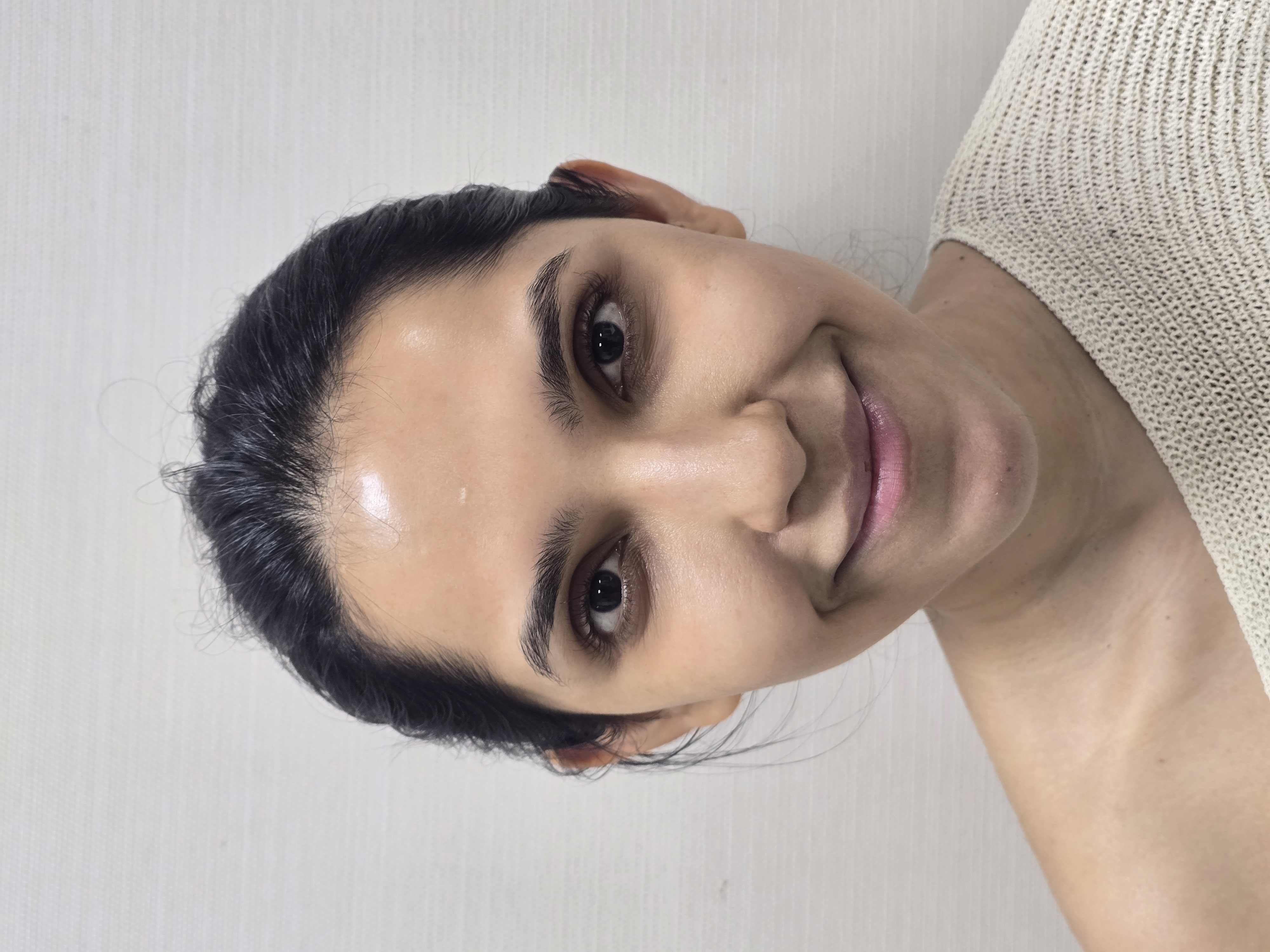
  • Before
    After
  • Before
    After
    Team Member
  • Before
    After
  • Before
    After
  • Before
    After
  • Before
    After
    Team Member
  • Before
    After
  • Before
    After
  • Before
    After

All the transformations below were achieved without any surgical interventions.

1

9

The community

Join 50,000+ people Start your transformation.

Get your personalized facial analysis and transformation plan based on your unique features.

Qoves made me realize what I could improve and backed it up with facts and I really appreciated that.

Moustafa Malha

Very great service, get exactly what you paid for and more!

Damano

For the price, the report is well done and very insightful. I will be following some of the recommendations from it.

Marek Smith

I was skeptical at first but after receiving my report and protocol and reading through the recommendations, I was highly impressed!

Ala Oueslati

Very informative. Very detailed. Lots of good insights. Fast results. Enjoyed the experience.

Sarah Bailey

All the recommendations that I’ve received are working very well for me.

Akshay

I really liked how much information was provided through my analysis.

Diana Escandon

The website was very easy to use, and portrayed the product very well.

Sophia

I was surprised at how in depth and detailed the report was, very insightful.

Sarah-Jane Ryan

Good experience! I received loads of good feedback, and the analysis made me feel better about my looks!

D Nguyen

Macken Murphy

“I'm excited to advance the science of beauty with QOVES and deepen our empirical understanding of how to improve facial attractiveness.”

Macken Murphy

Chief Scientist at QOVES

Your Questions

Frequently asked questions

If you have any further questions, please use the chat box in the bottom right or contact us by email at [email protected].

Your Questions

Will analyzing my face Make me insecure?

Most insecurity comes from uncertainty, not knowing if your concerns are real or imagined. When you're guessing about your appearance, your mind often makes things seem worse than they are.

  • You learn what's truly unique about your face.

    You learn what's truly unique about your face.

    Many features you might worry about are actually positive traits. Our analysis often helps people appreciate aspects of their face they used to dislike.

  • You get clarity about what can actually be improved.

    You get clarity about what can actually be improved.

    For example, slight facial asymmetry is perfectly normal-everyone has it and it should not be corrected. But if uneven skin tone is making you self-conscious, that's something we can help improve.

  • You gain control through
 knowledge.

    You gain control through knowledge.

    Takes into account genetic factors and how they might impact your facial appearance.

Is it vain to care about your appearance?

Many feel guilty about wanting to improve their looks, fearing it means they’re shallow or insecure. But here's what research tells us : caring about appearance is natural. Like health, finances, and education, it’s just another form of self-improvement.

Consider this...

  • First impressions matter

  • It has a considerable impact on interpersonal interactions

  • Small improvements can drastically impact quality of life

The key is approaching it intelligently

  • Not chasing unrealistic standards

  • Not trying to look like someone else

  • Not seeking perfection

  • Aiming only for a better version of yourself